

-
일본이 독도(獨島)를 공격하면
미국은 일본을 공격해야!
韓美상호방위조약상의 '한국의 행정력 아래 있는 영토'에 해당.
韓美동맹 존속하는 한 日本의 무력행사 ‘불가능'金泌材(조갑제닷컴)
-
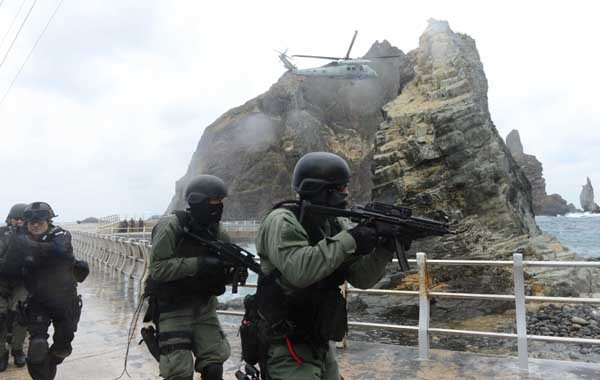
- ▲ 대한민국 군경의 독도방어훈련 모습ⓒ
한국의 ‘독도(獨島)의 날’을 하루 앞두고 일본 외무성이 獨島 영유권 주장을 담은 동영상을
인터넷을 통해 공개하자, 우리 軍은 25일 군경(軍警)합동으로 ‘독도방어훈련’을 실시했다.
이날 훈련에는 해군 1함대 소속 함정 5척과 해경 경비함 1척이 참가했다. 공군 전투기와 해군 초계기, 헬기를 비롯한 육군·경북 경찰청 병력, 독도 경비대 등이 참가했다. 공군의 F-15K 전투기는 이번 훈련에 가상의 '적(敵) 항공기’로 참가했다고 한다.
軍독도방어훈련, 효과적 대응방안 될 수 없어
특히 이번 훈련에는 해군 UDT와 해경 특공대가 훈련에 참가했다. 軍 관계자는, 외국인의 독도 기습상륙 상황을 가정해 특수 병력이 해군 헬기를 이용, 獨島에 상륙했다고 말했다.
與野는 이날 軍警이 獨島 방어 명목으로 합동군사훈련(독도방어훈련)을 실시한 데 대해 ‘영토 수호 의지를 확인하는 계기’라며 긍정적으로 평가했다.
그러나 국내 여론을 지나치게 의식한 나머지 獨島에 해군 UDT와 해경 특공대까지 동원해서 과시적 훈련을 하는 것이 적절한지는 짚어볼 필요가 있다.
獨島는 현재 경북지방경찰청 소속 울릉경비대 산하 ‘독도경비대’(전투경찰)가 지키고 있다. 역대 정부가 獨島에 國軍을 주둔시키지 않았던 것은 경찰력으로도 충분했기 때문이다. 냉정하게 볼 때 지금 그러한 상황이 바뀌지도 않았거니와, 獨島를 무단 상륙하려는 외국의 민간인을 독도경비대가 대응하지 못한다는 것은 말이 안 된다.
만일 외국군이 독도를 공격한다면 제해권과 제공권의 문제가 되므로, 독도에 수십 명의 특수병력을 투입하는 식의 훈련은 실제적이라고 하기 어렵다.
일본이 武力으로 독도 점령할 가능성은 없다
현행 일본 헌법(9조)은 《국권의 발동으로서의 전쟁과 무력(武力)에 의한 위협 또는 무력행사는 국제분쟁을 해결하는 수단으로서는 영구히 포기한다》라고 명기(1항)하고, 국가의 교전권(交戰權)도 인정하지 않고 있다(제2항).
즉, 현행 일본 헌법 하에서 '일본이 공격받는 상황'이 아닌 한, 우방인 대한민국에 대한 일본의 무력 사용 주장은 실현성이 거의 없다고 할 수 밖에 없다.
일본이 獨島가 자국영토라고 주장하다보니, 일부 극단주의자들은 한국의 獨島 점유는 국제법상 침략행위이며, 따라서 국제법상 자위권에 근거해 ‘무력을 사용하는 것이 가능하다’고 강변하고 있다. 그러나 이는 일본 내 극소수 인사들의 주장이다. 그들이 獨島에 대해 그렇게 주장한다면, 獨島 이전에 러시아가 점령하고 있는 ‘북방 도서’를 먼저 무력으로 탈환해야 할 것이다.
美, 日中 센카쿠 열도 분쟁에 ‘美日안보조약’ 제5조 적용
미국은, 일본과 중국이 영유권 분쟁을 벌이고 있는 센카쿠 열도 문제에서 명확하게 일본을 편들고 있다. 물론 미국의 대응은 군사대국화를 추구하는 중국의 팽창주의를 견제하는 것이지만, 동맹관계가 영토 분쟁에서 어떠한 의미를 가지는지 참고가 된다.
클린턴 前 국무장관은 2010년 9월 일본과 중국이 영유권 분쟁을 벌이고 있는 센카쿠 열도 문제와 관련, <美日 양국은 일본의 행정력 아래 있는 영토에서 미국 또는 일본에 대한 ‘무력공격’이 있는 경우 자국의 헌법 규정 및 절차에 따라 공동의 위험에 대처하도록 행동할 것을 선언한다>는 ‘美日안보조약’(1960년 체결) 제5조가 적용되는 지역이라고 밝혔다(조약 원문: Each Party recognizes that an armed attack against either Party in the territories under the administration of Japan would be dangerous to its own peace and safety and declares that it would act to meet the common danger in accordance with its constitutional provisions and processes. Any such armed attack and all measures taken as a result thereof shall be immediately reported to the Security Council of the United Nations in accordance with the provisions of Article 51 of the Charter. Such measures shall be terminated when the Security Council has taken the measures necessary to restore and maintain international peace and security).
韓, 영토 분쟁에도 ‘韓美상호방위조약’ 기능
당시 일본 언론들은 클린턴 장관의 美日안보조약 발언을 대서특필(大書特筆)했는데 이유는 센카쿠 분쟁에서 미국이 사실상 일본의 손을 들어 주었기 때문이다.
한국과 일본은 모두 미국의 동맹국이므로, 한국으로서는 ‘이어도’를 지키기 위한 것이라면 몰라도, 獨島로 韓美동맹이나 美日동맹을 이용하는 것은 바람직 하지 않다.
1954년 11월18일 발효된 ‘한미상호방위조약’(韓美相互防衛條約, the ROK-U.S. Mutual Defense Agreement)은 독도를 韓美동맹의 대상으로 규정하게 만드는 조항을 담았다.
韓美상호방위조약 제3조는 <각 당사국은 타 당사국의 행정관리하에 있는 영토 또한 금후 각 당사국이 타 당사국의 행정관리 하에 합법적으로 들어갔다고 인정하는 영토에 있어서 타 당사국에 대한 태평양지역에 있어서의 무력공격을 자국의 평화와 안전을 위태롭게 하는 것이라고 인정하고 공통한 위험에 대처하기 위하여 각자의 헌법상의 수속에 따라 행동할 것을 선언한다>고 되어 있다(조약 원문: Each Party recognizes that an armed attack in the Pacific area on either of the Parties in territories now under their respective administrative control, or hereafter recognized by one of the Parties as lawfully brought under the administrative control of the other, would be dangerous to its own peace and safety and declares that it would act to meet the common danger in accordance with its constitutional processes).
즉, 韓美상호방위조약 제3조에 따라 獨島는 대한민국의 ‘행정관리’(administrative control) 하에 있는 지역(영토)이기 때문에, 유사시 타국이 독도에 대한 ‘무력위협’이나 ‘도발’ 시에 한국이 미국에 도움을 요청하는 것이 가능하다는 결론이 도출된다.
韓美양국, 2000년 독도 해역에서 '실사격 훈련' 실시
정전상태인 한국으로서는 獨島가 韓美연합사의 ‘작전범위’ 내이며 韓美양국은 이 지역에서 수시로 훈련을 해왔다. 양국은 2000년 일본의 항의에도 불구하고 獨島 해역에서 ‘실사격 훈련’을 했다. 2010년 울릉도 일대에서 대잠(對潛)훈련과 공군 편대군 훈련을 벌였는데, 獨島 상공에서 美공군 급유기가 한국 공군의 F-16전투기에 급유를 하는 훈련이 실시됐다. 즉 미국도 獨島를 상호방위 대상으로 보고 있다는 이야기이다.
한국은 獨島에 대해 軍 병력을 동원해 일본사회의 반발과 갈등을 자극-고조시키는 방식보다는, 獨島가 전쟁 중인 대한민국의 작전, 방어 대상이며, 韓美연합사 체제 하에서 이를 지키고 있는 현실을 보여주는 것이 더 바람직하다.
한국은 일본이 결코 쳐들어 올 수도 없는 ‘獨島’가 아니라, 西海를 內海로 만들려는 중국과 이에 동조하는 從中세력 대비가 더욱 시급하다. 이를 위해서는 韓美日 동맹체제가 그 어느 때보다 중요하다. 무엇보다 미국과의 관계를 공고히 해 ‘시대의 균형’을 잡아가야 할 것이다.
한국 정부가 미국 정부에, 獨島가 韓美상호방위조약상 공동으로 지켜야 할 대상, 즉 조약상 '대한민국의 행정관리(administrative control)하에 있는 영토'임을 재확인해달라고 압박할 수는 있을 것이다. 미국은 美日안보조약에 근거, 센카쿠 열도에 대한 일본의 행정관리를 인정하고, 이를 근거로 美日안보조약이 적용된다는 발표를 한 바 있으므로 한국의 요구를 거절할 순 없게 되어 있다.
물론 미국이 공개적으로 그런 입장을 표명하면 美日관계가 어렵게 되므로 미국은 곤혹스러워 할 것이다. 미국은 '너무나 당연한 것인데 굳이 우리가 공개적으로 그렇게 할 필요가 있겠는가'라고 나올 것이다. 그럴 경우엔 한국 정부가 국민들에게 조약 내용을 알리고 獨島에 대한 일본의 武力침공은 불가능하다고 설명해야 하는데 오히려 있을 수 없는 武力침공을 가정한 훈련(독도방어훈련)을 하는 모습이다.
조갑제닷컴 김필재 spooner1@hanmail.net
Mutual Defense Treaty Between the United States and the Republic of Korea
October 1, 1953(1)
Art 1 Art 2 Art 3 Art 4 Art 5 Art 6
The Parties to this Treaty,
Reaffirming their desire to live in peace with all peoples and an governments, and desiring to strengthen the fabric of peace in the Pacific area,
Desiring to declare publicly and formally their common determination to defend themselves against external armed attack so that no potential aggressor could be under the illusion that either of them stands alone in the Pacific area,
Desiring further to strengthen their efforts for collective defense for the preservation of peace and security pending the development of a more comprehensive and effective system of regional security in the Pacific area,
Have agreed as follows:
ARTICLE I
The Parties undertake to settle any international disputes in which they may be involved by peaceful means in such a manner that international peace and security and justice are not endangered and to refrain in their international relations from the threat or use of force in any manner inconsistent with the Purposes of the United Nations, or obligations assumed by any Party toward the United Nations.
ARTICLE II
The Parties will consult together whenever, in the opinion of either of them, the political independence or security of either of the Parties is threatened by external armed attack. Separately and jointly, by self help and mutual aid, the Parties will maintain and develop appropriate means to deter armed attack and will take suitable measures in consultation and agreement to implement this Treaty and to further its purposes.
ARTICLE III
Each Party recognizes that an armed attack in the Pacific area on either of the Parties in territories now under their respective administrative control, or hereafter recognized by one of the Parties as lawfully brought under the administrative control of the other, would be dangerous to its own peace and safety and declares that it would act to meet the common danger in accordance with its constitutional processes.
ARTICLE IV
The Republic of Korea grants, and the United States of America accepts, the right to dispose United States land, air and sea forces in and about the territory of the Republic of Korea as determined by mutual agreement.
ARTICLE V
This Treaty shall be ratified by the United States of America and the Republic of Korea in accordance with their respective constitutional processes and will come into force when instruments of ratification thereof have been exchanged by them at Washington.(2)
ARTICLE VI
This Treaty shall remain in force indefinitely. Either Party may terminate it one year after notice has been given to the other Party.
IN WITNESS WHEREOF the undersigned Plenipotentiaries have signed this Treaty.
DONE in duplicate at Washington, in the English and Korean languages, this first day of October 1953.
UNDERSTANDING OF THE UNITED STATES (3)
[The United States Senate gave its advice and consent to the ratification of the treaty subject to the following understanding:]
It is the understanding of the United States that neither party is obligated, under Article III of the above Treaty, to come to the aid of the other except in case of an external armed attack against such party nor shall anything in the present Treaty be construed as requiring the United States to give assistance to Korea except in the event of an armed attack against territory which has been recognized by the United States as lawfully brought under the administrative control of the Republic of Korea.
[The United States communicated the text of the understanding to the Republic of Korea in a note of January 28, 1954, acknowledged by the Republic of Korea in a note of February 1, 1954. The text of the understanding was included in the President's proclamation of November 17, 1954.]
(1) TIAS 3097, 5 UST 23602376. Ratification advised by the Senate Jan. 26, 1954, and ratified by the President Feb. 5, 1954, subject to an understanding entered into force Nov. 17, 1954. Back
(2) Ratifications were exchanged Nov. 17, 1954. Back
(3) TIAS 3097. Back
[조갑제닷컴=뉴데일리 특약]
김필재 칼럼 일본이 독도(獨島)를 공격하면
미국은 일본을 공격해야!
- 김필재
입력 2013-10-28 21:16수정 2013-10-29 17:26
공유하기
기사 공유하기
 글자크기
글자크기


김필재
이 시각 주요뉴스